
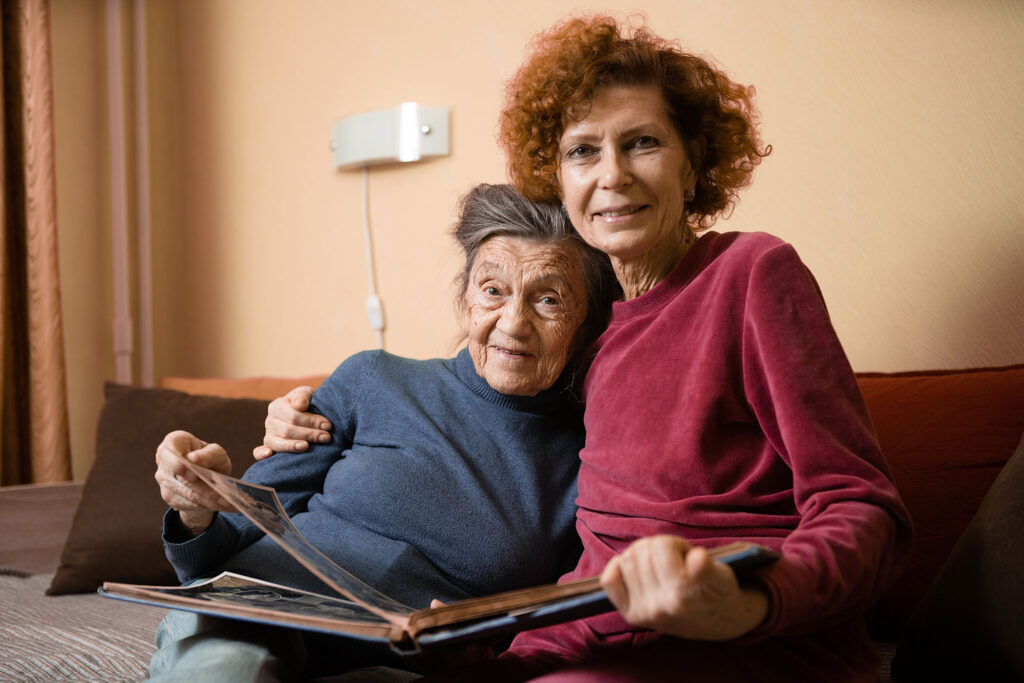
Dementia care gives families support while helping seniors stay safe at home.
Taking care of a senior parent with dementia can be very challenging for family caregivers. If your parent has dementia and wants to stay in their home, in-home dementia care can help you care for them.
Dementia care is a type of home care created specifically for seniors who have dementia. No matter what stage of dementia your parent is in, dementia care can help them be safe and comfortable at home.
Having dementia care makes it easier for family caregivers to work, take care of their kids, or just get the regular breaks they need to process the stress of caring for a parent with dementia.
One of the toughest parts of caring for a parent with dementia is figuring out how to communicate with them and how to keep them safe. The stress of making sure they don’t leave the stove on or walk out the door can be tough on family caregivers. A trained caregiver who has experience working with seniors who have dementia can make it easier to keep your parent safe and comfortable at home.
How Caring For A Parent With Dementia Affects Family Members
Family members who are caring for a parent who has dementia have a high risk of caregiver burnout.
Dementia care gives family caregivers breaks they need to care for themselves. Without regular breaks, family caregivers can suffer health problems like:
Sleep Problems
Caring for a parent with dementia can make it difficult to get enough sleep. You may lie awake worrying about your parent, wake up often to check on them, or struggle to relax because you feel like you always need to be available.
If your parent experiences confusion, wandering, or restlessness at night, uninterrupted sleep can become even harder. Over time, regularly missing sleep can leave you exhausted during the day and make it harder to concentrate, work, or manage other responsibilities.
Anxiety
Constantly worrying about your parent’s safety and well-being can contribute to anxiety. You may worry that your parent will fall, wander away from home, forget to eat, or experience another problem when you’re not there.
You may even find yourself worrying when you’re supposed to be relaxing because you’re wondering what’s happening at your parent’s house.
This ongoing stress can make it difficult to concentrate or enjoy your own life. Getting regular help with your parent’s care can give you time when you don’t have to be responsible for everything.
Depression
Caregiving can be emotionally difficult, especially when your parent has dementia. Watching someone you love experience changes in their memory, personality, and abilities can bring feelings of sadness, grief, frustration, and helplessness.
You may also become socially isolated because you don’t have enough time or energy to see friends or participate in activities you once enjoyed.
Over time, these circumstances can contribute to depression. If you’re experiencing persistent sadness, hopelessness, loss of interest in things you normally enjoy, or other symptoms of depression, companion care at home can give you regular time off to take care of yourself.
High Blood Pressure
Caregiver stress doesn’t just affect emotional health. Chronic stress can also affect your physical health, including your cardiovascular system.
When you’re constantly rushing between your parent’s needs, your job, your family, and other responsibilities, your body may spend a lot of time responding to stress. Chronic stress can contribute to high blood pressure and other cardiovascular risk factors.
You may also have less time to prepare nutritious meals, keep medical appointments, get enough sleep, and maintain other healthy routines.
Headaches And Physical Pain
Stress can show up physically in several ways. You may experience frequent headaches or notice increased tension in your neck, shoulders, or back.
Caregiving itself can also be physically demanding. If you’re helping your parent get out of bed, transfer to a chair, get dressed, or complete other daily activities, you may strain your muscles or injure your back.
Fatigue can make these problems worse because you’re performing physically demanding tasks when your body hasn’t had enough time to recover.
Dementia care at home can take some of the physical demands of caregiving off your shoulders. A trained care provider can assist your parent with everyday tasks while giving you time to rest, attend your own medical appointments, spend time with friends and family, or simply have some time to yourself.
If you or an aging loved one is considering Dementia Care in Syosset, NY, please contact the caring staff at Brookville Homecare today. 516-802-7722